Branding - Systems

Visual Brand Guidelines

I strategized a new visual system across 20+ gaming studios to unify shared content experiences for 16,000+ employees globally.

Company
Xbox gaming
Dates
June 2025 - ongoing
Tools
Indesign - sharepoint - ppt

Problem: How do we create a design system that feels inclusive of over 20 different identities?

Post acquision of Activision Blizzard, Xbox gaming had become comprised of over 20 unique studio cultures with unique intellectual property ranging from Gears of War to Minecraft. This created a dissonance in visual design standards across shared content, surfacing these goals:

Goal
1

Define a set of visual standards that feels inherently gaming and unique

Goal
2

Gain consensus among stakeholders to deploy content that spans all studios

Analysis

Recognizing the stakeholders spanned the globe, cultural differences and identities were the first to address; the system should not remove the attachment to specific intellectual property or disrupt business, but add value and encourage collaboration.

Through several conversations from executives, project leads, marketing and talent the need for the system was validated.

First attempt

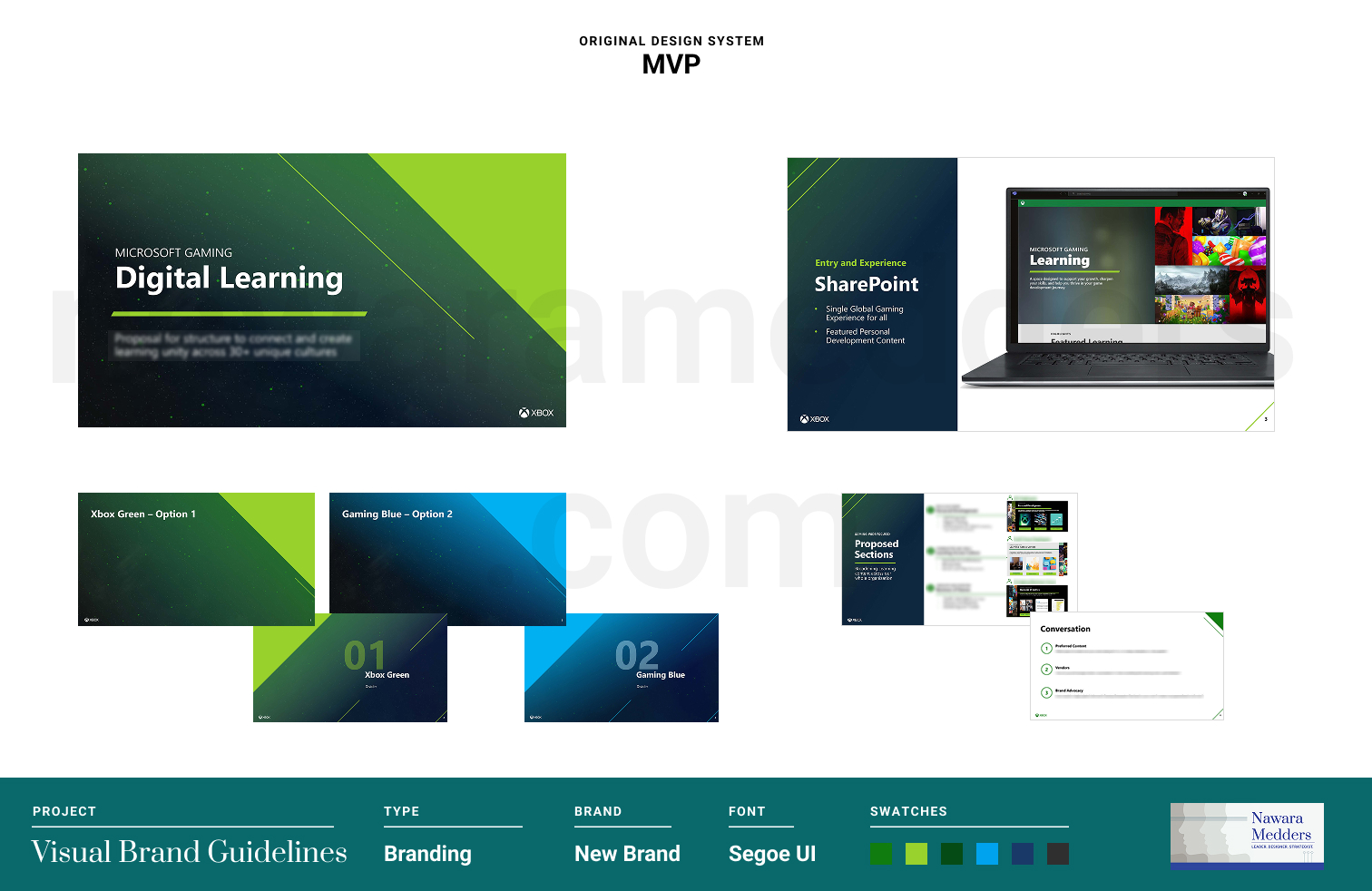
Initial attempts at branding were more rooted in Xbox consumer branding. Fewer game franchises were featured and the system was designed to flex towards total creative freedom. In practice, the system felt less "video game" and more "practical".

Standards

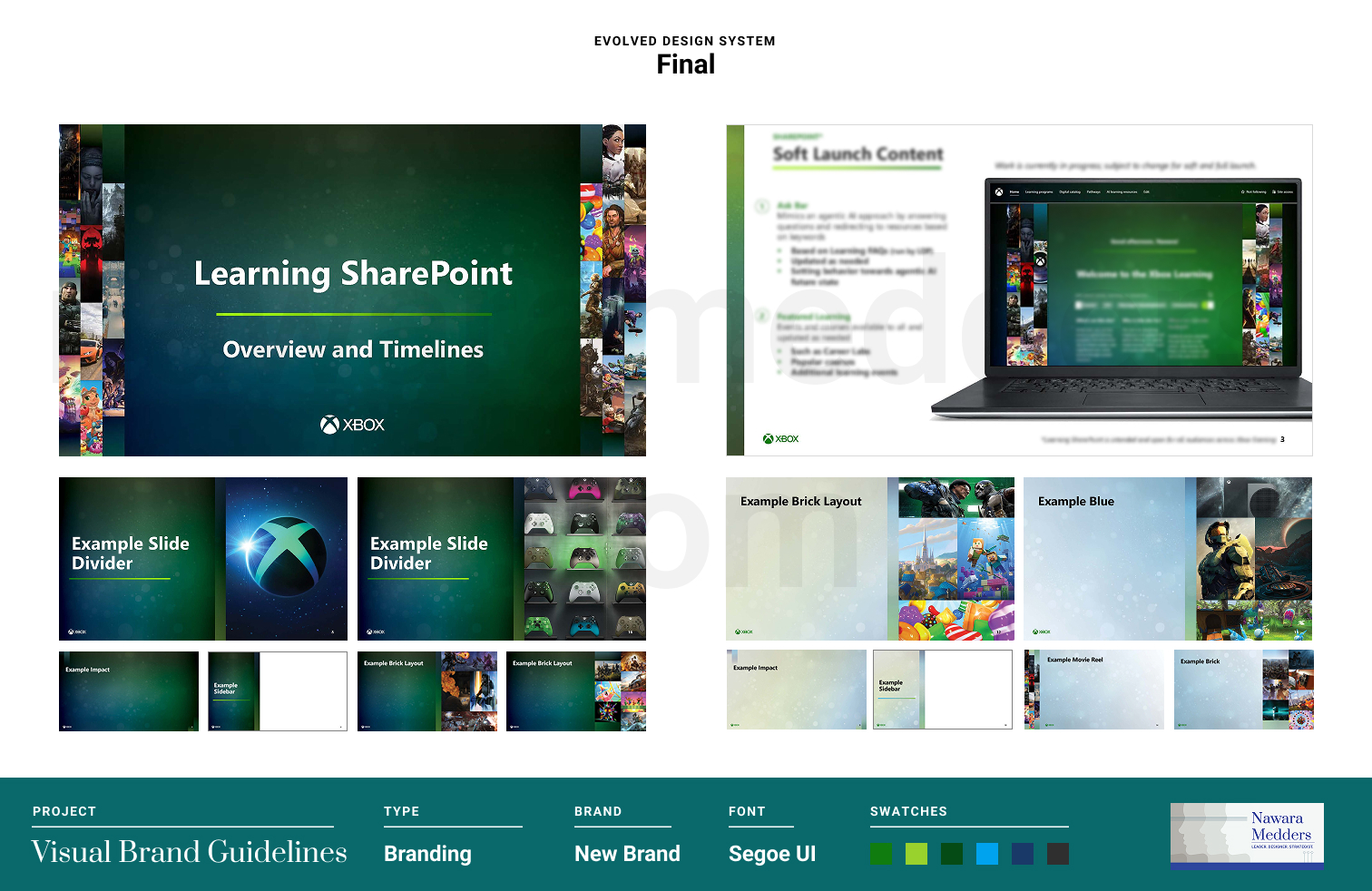
After a few more iterations and usecases among executive leadership, I devised a system of using keyart from each of our studios in a movie reel or brick layout to bring back the elements of video games. Along with the graphics, gradients, textures and an expanded color palette allow the system to expand and contract to each type of deliverable.

SharePoint

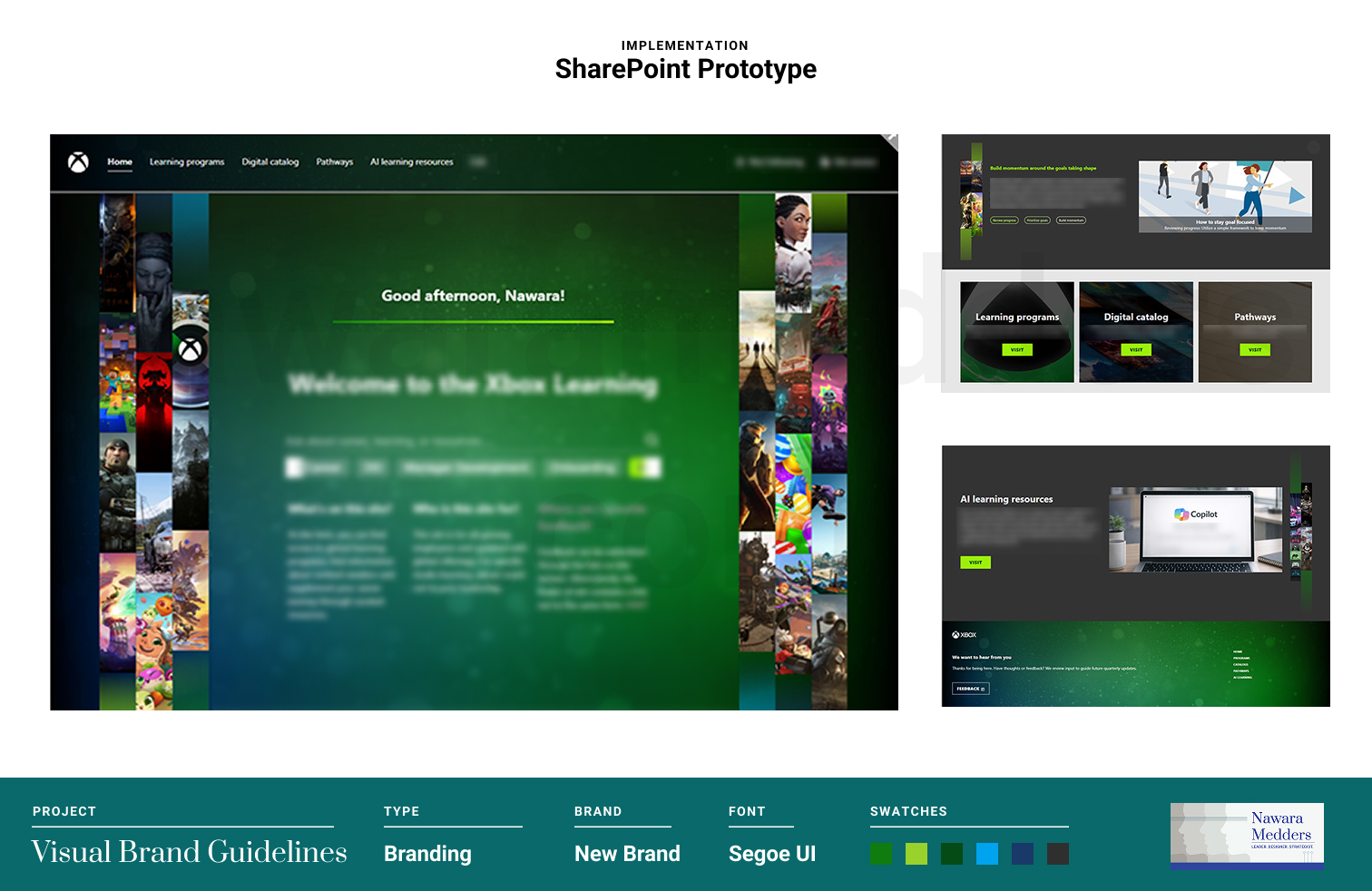
Implementation of the guidelines was important to use as an example. While presentations, documents, and other single use materials was a good learning, by incorporating elements in a native digital format allowed for the system to flex and be used for all.

Guidebook

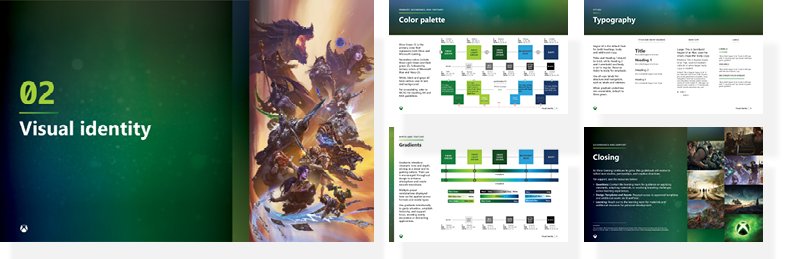
In tandem with building materials, the guidebook continued to evolve. As it stands, five major sections have been outlined describing the foundations for the main usecase of learning and development. The standard holds value today, often being cited among folks as a more concrete way to approach design for such a broad audience.